Before I went to China, I thought I had a pretty good idea of what to expect. I'd read the articles. I'd seen the news. I figured it would be... fine. Maybe a little uncomfortable. Probably confusing. Definitely not somewhere I'd want to wander around at night.
I was wrong about almost everything.
After 30 days bouncing between cities across China — from megacities like Beijing and Shanghai to the karst mountains of Guilin and the surreal pillars of Zhangjiajie — I came home with my entire perception flipped on its head. Not because China is perfect (no country is), but because the gap between what I thought I knew and what I actually experienced was enormous.
If you're thinking about visiting China for the first time, here's the stuff I wish someone had told me.
China Is Safer Than You Think
This is the one that really got me.
I walked through city streets at 11 PM, midnight, 1 AM. I took the subway late at night. I wandered through neighborhoods where I was clearly the only foreigner around. And at no point — not a single time — did I feel unsafe.
Streets were well-lit and full of people even late at night. Families were out walking. Elderly people were sitting on benches chatting. There was this ambient sense of public order that I wasn't expecting, and honestly, it took a few days to fully relax into it.
I'm not saying nothing bad ever happens in China. But as a tourist? The level of personal safety is genuinely high. Violent crime is rare, petty theft is uncommon, and there's a visible sense of security in public spaces that makes exploring feel natural rather than stressful.
The Scale of Everything Is Hard to Process
I visited over a dozen cities and I still feel like I barely scratched the surface. That's not a cliché — it's just the reality of how massive China is.
Take Wuhan. Most Americans know the name from the news, but nothing else. I didn't know what to expect either — and then I found myself standing on the banks of the Yangtze River at sunset, watching cargo ships drift past this enormous, vibrant city of 11 million people. Wuhan sits right at the geographic heart of China, where the Yangtze and Han rivers meet, and the energy is incredible. The street food scene along Hubu Alley (户部巷) is the kind of thing where you just keep walking and eating, walking and eating, until you realize you've spent $8 and you're completely full. Their signature hot dry noodles (热干面) — sesame paste over fresh noodles — cost about $1.50 and I still think about them.
Then there's Guilin, which completely broke my brain. I'd seen photos of those iconic karst mountains rising out of the Li River, but photos don't capture what it's like to actually be there. I took a boat from Guilin down to Yangshuo, and for two hours, I was floating through what looked like a traditional Chinese ink painting come to life. Mist clinging to green peaks, water buffalo wading in the shallows, cormorant fishermen on bamboo rafts. Yangshuo itself has this amazing vibe — a small town surrounded by impossible mountains, with a walking street full of food stalls and a lively night market. If you only go to one natural landscape in China, make it Guilin.
And Zhangjiajie — the place that inspired the floating mountains in Avatar. I'm not even a big movie person, but standing on that glass bridge suspended between sandstone pillars hundreds of meters in the air, looking out at hundreds of these towering rock columns stretching to the horizon... that's a moment I'll never forget. The hike through Zhangjiajie National Forest Park took most of a day, and every turn in the trail revealed another view that didn't seem real. Pro tip: go early. Like, first-bus-to-the-mountain early. The crowds are intense by mid-morning, but if you're on the trail by 7 AM, you'll have stretches where it's just you and the silence and these impossibly tall pillars of rock.
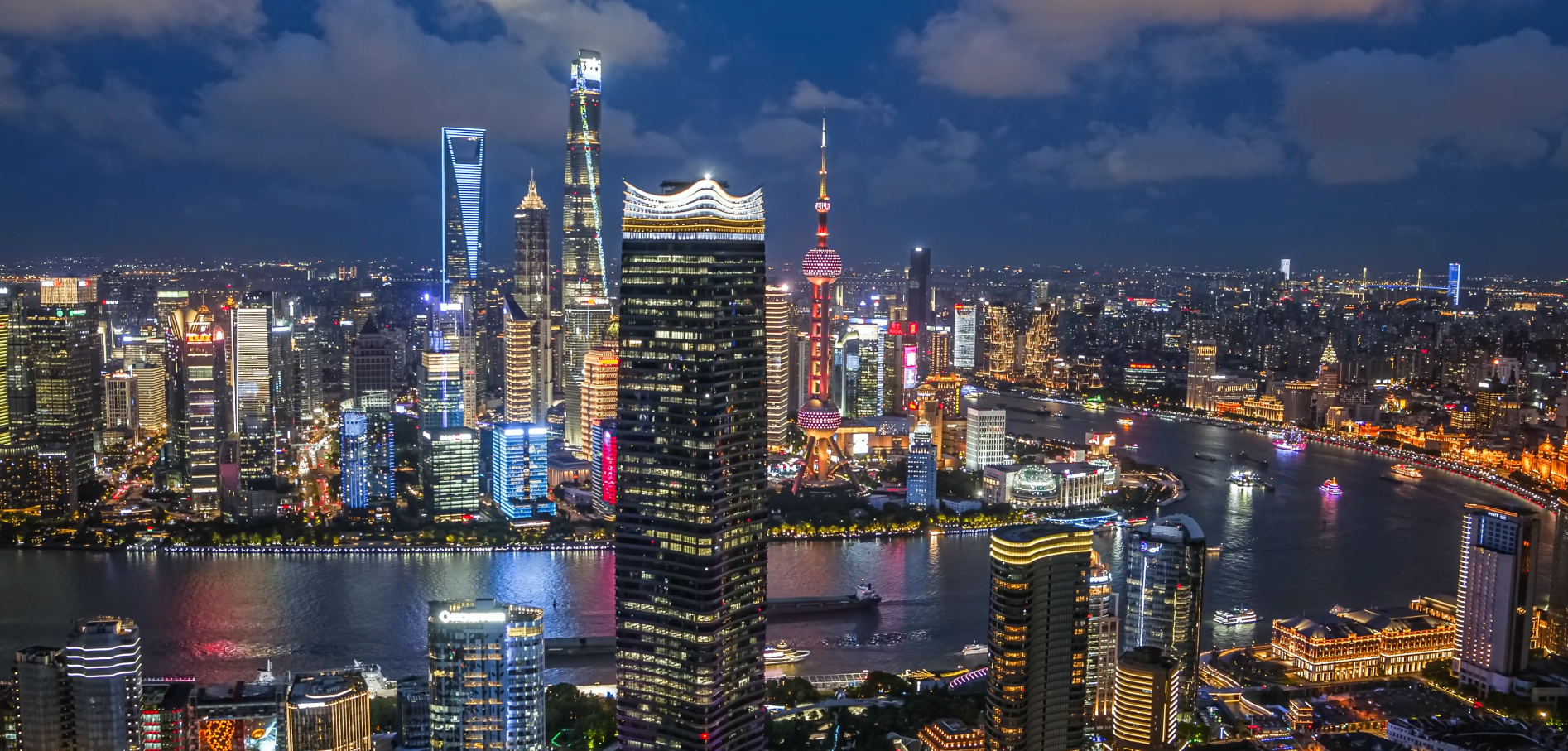
Shanghai's Pudong skyline — a level of modernity I wasn't prepared for
Shanghai was where the sheer scale of modern China really hit me. Walking along The Bund at night, looking across the river at the forest of illuminated skyscrapers in Pudong, I realized this wasn't just "a big city." This was a vision of the future that already exists. The speed of the maglev train from the airport (431 km/h at peak) set the tone before I even checked into my hotel.
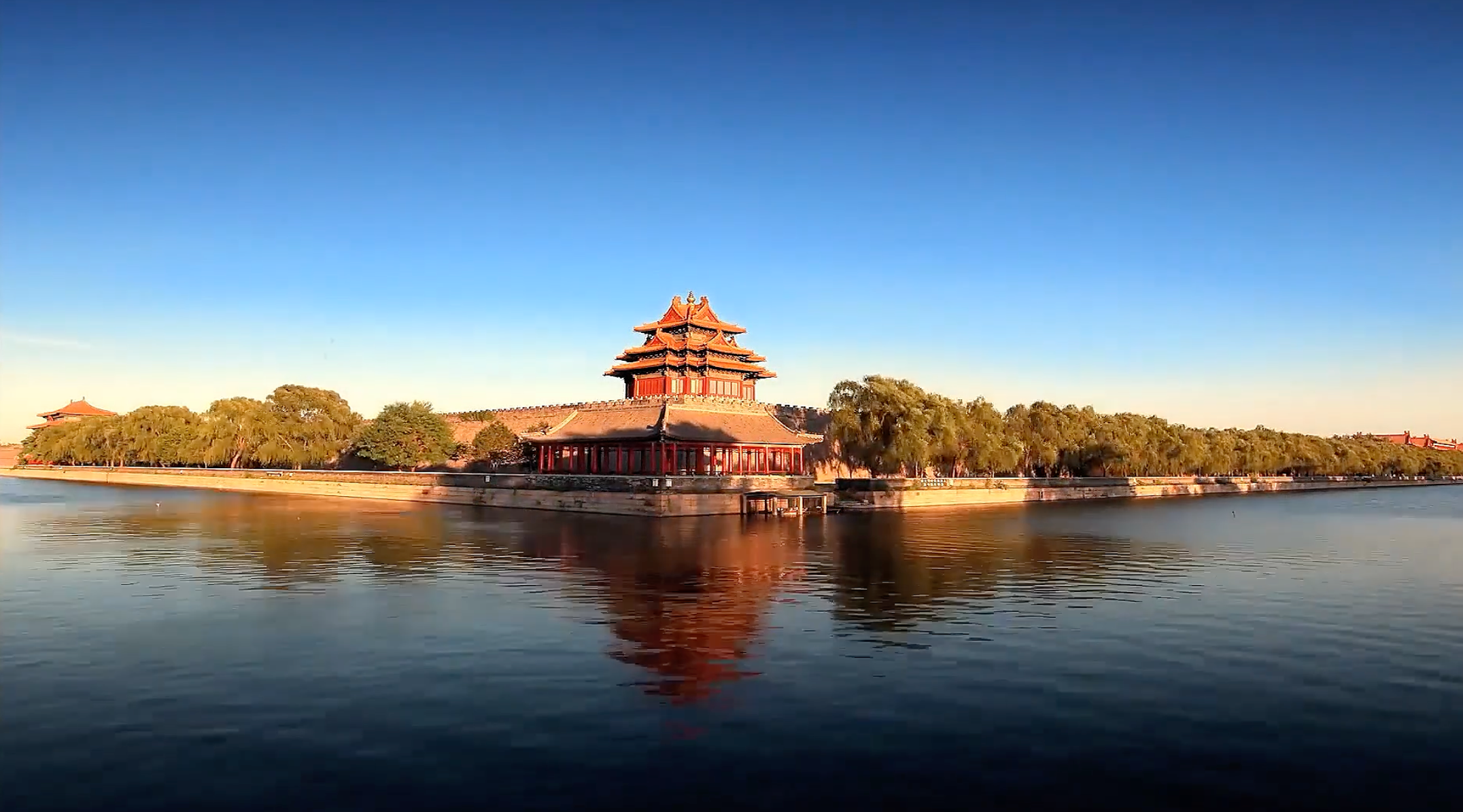
The Forbidden City at sunset — 600 years of history in one view
Beijing was where I expected to have the best food, and honestly, the culinary bar was already high before I even got there. But Beijing delivered — the roast duck, the noodle shops, the street food stalls that somehow taste better at 2 AM than anything I've paid $40 for back home.
Chengdu won me over with its slower pace, the hotpot that nearly took my head off (in the best way), and the tea houses where you can sit for hours. Yes, the pandas are great. But I left thinking about everything else.
Set Up Alipay and WeChat Pay BEFORE You Land
China barely uses cash. I don't mean "cash is less popular" — I mean street vendors, convenience stores, subway turnstiles, taxi drivers... they all want you to scan a QR code with your phone. When I tried to hand over a 100 RMB note at a small shop, the owner had to dig around to find change like it was a rare event.
The good news: both Alipay and WeChat Pay now accept foreign credit cards. Setup takes about 10-15 minutes each. Do it at home, before your flight, while you still have unrestricted internet.
I made the mistake of waiting until I arrived. Spent my first afternoon in China sitting in a hotel lobby trying to verify accounts over a spotty VPN connection. Don't be me.
👉 Need help? FirstTimeChinaTravel's Alipay Setup Guide and WeChat Pay Guide walk you through it step by step with screenshots.
The Food Will Ruin You
Here's a sentence I never expected to say: in 30 days in China, I never once craved a cheeseburger.
For context, I'm the kind of American who considers a burger a food group. But China's food scene just... took over. Every city had its own thing going on:
- Beijing — roast duck, obviously, but also these incredible noodle shops where a bowl costs about $2.50 and is better than anything at my local ramen spot
- Chengdu — the hotpot. I can't describe it in a way that does it justice. You just have to go.
- Guangzhou — dim sum that made me understand why people travel for food
- Shanghai — soup dumplings (xiaolongbao) that should be illegal
- Wuhan — hot dry noodles (热干面) with sesame paste for $1.50, and a street food scene on Hubu Alley that goes all night. The breakfast culture alone is worth the trip.
- Guilin/Yangshuo — the food is surprisingly good for a small tourist town. Beer fish (啤酒鱼) is the local specialty — fresh fish from the Li River cooked with tomatoes, peppers, and beer. Sounds weird, tastes incredible.
And here's the part that really got me: the food felt healthier. More vegetables, less processed stuff, actual freshness. I didn't gain weight despite eating what felt like triple my normal amount. There's something to be said for a food culture that's been refined over a few thousand years.
If you're worried about ordering without speaking Chinese: most restaurants have picture menus or display food in glass cases out front. Pointing works perfectly fine. Translation apps handle the rest. For more strategies, check the Food & Dining Guide.
The Trains Are Unbelievable
I've taken trains in Europe. I've taken the Shinkansen in Japan. China's high-speed rail network hits different.
It's not just the speed (though 350 km/h is nothing to shrug at). It's the scale. The network connects virtually every major city, trains run constantly, stations are massive and modern, and tickets are reasonably priced. I'd show up at a train station the size of an airport, grab a ticket, and be in a completely different city a couple of hours later.
The experience of riding the train from Wuhan to Guilin — watching the landscape shift from the wide Yangtze floodplains to the sudden, dramatic karst mountains of Guangxi province — was one of the highlights of my entire trip. One moment you're seeing flat farmland, and then these limestone peaks just start rising out of the earth like something from a fantasy novel. The high-speed rail to Zhangjiajie is equally dramatic — you see the terrain transform into deep ravines and forested cliffs as you approach.
Practical note: You can book tickets in English through Trip.com. The Transportation Guide on FirstTimeChinaTravel has the full walkthrough.
Things That Actually Bugged Me
I don't want to paint an unrealistic picture. There were things that frustrated me:
- The internet situation is real. Google, Instagram, WhatsApp — they don't work without a VPN. Set one up before you arrive, because downloading one from inside China is... complicated. The Internet & Phone Guide has recommendations.
- Squat toilets take getting used to. They're common in public places. Carry your own tissues (many bathrooms don't provide them). It's not a disaster, just... different. You adapt faster than you'd think.
- Language barrier is real outside tourist areas. In central Shanghai or Beijing, you can get by with English. In a random neighborhood in Chengdu? Not so much. Download offline translation packs and learn a few basic phrases. The Language Survival Kit has the essentials.
- Nobody's going to speak English at you. And that's fine — you're in their country. But it does mean you need to be more prepared than you would be visiting, say, Amsterdam.
Would I Go Back?
In a heartbeat.
And next time, I'd do it differently. I rushed through too many cities in 30 days, which meant I was packing and unpacking every 2-3 days. Next time, I'd pick 4-5 places and spend a week in each. Really sink into the rhythm of a place instead of just passing through. And I'd make sure Guilin and Zhangjiajie get at least 3-4 days each — they deserve more than a rushed day trip.
I'd also bring fewer things. Everything you need is available and cheap in China — toiletries, clothes, snacks, phone accessories. My overpacked suitcase was a running joke. See the Packing List for what you actually need.
The Bottom Line
Here's what I want you to take away from this: the fear of China is way worse than China itself.
The Western media paints a picture that's so incomplete it might as well be fiction. I'm not saying China doesn't have problems — every country does. But as a tourist? You're going to be fine. More than fine. You're going to have your mind blown by how different reality is from what you've been told.
The only thing standing between you and an incredible trip is preparation. That's literally why FirstTimeChina exists — it's the guide I wish I'd had before my flight. Payment setup, internet access, train booking, food ordering, emergency info — it's all there, written by people who actually understand what a first-timer needs to know.
Go to China. See it for yourself. Let reality replace the headlines.
FAQ: What First-Time Visitors Ask Most
Is China safe for tourists?
Yes. Violent crime against tourists is extremely rare. Streets are well-lit and busy even late at night, and petty theft is uncommon. I walked around major cities at all hours and never felt threatened.
Can I use my credit card in China?
Rarely. International cards are accepted at some high-end hotels and luxury stores, but that's about it. Your best bet is setting up Alipay and WeChat Pay, which now both accept foreign credit cards.
Do I need a VPN in China?
Yes, if you want to access Google, Instagram, WhatsApp, or other Western services. Download and install a VPN before you arrive — many VPN websites are blocked inside China. See the Internet Guide for current recommendations.
How do I pay for things in China?
Almost exclusively through Alipay or WeChat Pay on your phone. Cash is accepted but increasingly inconvenient. Credit cards are rarely used outside international hotels.
Can I travel in China without speaking Chinese?
Yes, but prepare to be creative. Translation apps, picture menus, and pointing go a long way. Learning even a handful of basic phrases (hello, thank you, how much) makes a huge difference. The Language Survival Kit has you covered.
A First-Time Traveler
An American who spent 30+ days traveling through China for the first time, sharing honest observations from a beginner's perspective. This article is part of FirstTimeChina — the practical guide for first-time visitors to China.